
Key Takeaways
- Powered air-purifying respirators (PAPRs) use a battery-powered blower to move air through compatible filters or cartridges.
- Traditional air-purifying respirators rely on the wearer’s breathing to draw air through their filtration system.
- Supplied-air respirators and self-contained breathing apparatus (SCBA) provide breathing air from a source independent of the surrounding atmosphere.
- PAPRs may offer lower breathing resistance and flexible headgear options, but they require battery management and regular maintenance.
- Respirator selection depends on the workplace hazards, contaminant concentration, oxygen levels, and required level of protection.
- Employers should follow applicable respiratory protection standards, manufacturer instructions, and workplace safety procedures.
Respiratory protection is essential in workplaces where employees may encounter airborne particles, hazardous gases, vapors, fumes, or other contaminants. However, not all respiratory protection equipment works in the same way. Understanding the differences between available options helps employers evaluate which equipment is appropriate for their specific workplace conditions.
A powered air-purifying respirator (PAPR) uses a motorized blower to move ambient air through compatible filters or cartridges before delivering it to the wearer. Other respirators may rely on the user’s breathing to draw air through a filter or use an independent source of breathing air.
Comparing these systems involves more than looking at their appearance. Their operating principles, protection capabilities, comfort, maintenance requirements, and limitations all influence whether they are suitable for a particular task.
How Does a PAPR Work?
A PAPR is an air-purifying respirator that uses a battery-powered blower to pull surrounding air through compatible filters or cartridges. The cleaned air is then delivered to the wearer’s breathing zone through a facepiece, hood, helmet, or other approved headgear.
The blower distinguishes this equipment from non-powered air-purifying respirators, which rely on the wearer’s inhalation to move air through the filtration system. Depending on its configuration, a PAPR may provide lower breathing resistance and allow the user to wear a loose-fitting hood or helmet instead of a tight-fitting facepiece.
PAPRs are used in different industries, including healthcare, manufacturing, laboratories, and certain industrial environments. However, the appropriate configuration depends on the hazards present and the equipment’s approved use.
Understanding Powered Airflow
The blower is a central component of a PAPR. It moves air through the selected filtration system and delivers it toward the wearer’s breathing zone.
A typical system includes:
- Blower unit: Moves air through the filtration system using battery power.
- Filters or cartridges: Remove specific contaminants when the correct components are selected.
- Breathing tube: Carries filtered air from the blower to the headgear in configurations that use one.
- Headgear: May include a hood, helmet, or compatible facepiece.
- Battery: Supplies the power needed to operate the blower.
The exact configuration varies by manufacturer and model. Workers must inspect the equipment, verify adequate airflow, and follow the manufacturer’s instructions before use.
Battery condition, filter installation, airflow, and component compatibility can all affect performance. A PAPR should never be assumed to provide protection simply because the blower is running.
What Are the Main Types of Respirators?
Respirators are designed to address different respiratory hazards. Understanding the main categories makes it easier to compare a powered system with other options.
Non-Powered Air-Purifying Respirators
Non-powered air-purifying respirators use filters, cartridges, or canisters to remove specified contaminants from the surrounding air. The wearer’s inhalation draws air through the filtration components.
Examples include disposable filtering facepiece respirators and reusable elastomeric half-facepiece or full-facepiece respirators.
These devices can be appropriate for many workplace applications when the selected model, filtration components, and protection level match the hazard.
Tight-fitting models require appropriate fit testing when required by the applicable respiratory protection program. Users must also follow the manufacturer’s instructions for inspection, use, storage, and replacement of filters or cartridges.
Supplied-Air Respirators
Supplied-air respirators deliver breathing air from a source independent of the surrounding atmosphere, commonly through an air line connected to an appropriate supply.
These systems may be suitable for specific work environments where air-purifying equipment is not appropriate. Their use requires careful attention to air quality, supply capacity, connections, hoses, and applicable safety requirements.
Because the breathing air comes from an external supply, the system has different operational considerations from a battery-powered PAPR.
Self-Contained Breathing Apparatus
A self-contained breathing apparatus (SCBA) carries its breathing-air supply with the user. SCBA systems are used in certain emergency response and hazardous-atmosphere applications.
They require specialized training, equipment checks, and procedures for managing the available air supply. The appropriate configuration depends on the hazards and applicable requirements.
Air-purifying respirators, including PAPRs, must not be used in oxygen-deficient or immediately dangerous to life or health (IDLH) atmospheres unless a specific applicable exception permits the use of an appropriate atmosphere-supplying respirator. Respirator selection should always be based on a formal hazard assessment.
PAPR vs. Other Respirators: What Are the Key Differences?
Although different respirators serve the same broad purpose of protecting the respiratory system, they vary in how they deliver clean air and the conditions in which they can be used.
A PAPR uses a powered blower to move filtered ambient air. A non-powered air-purifying respirator relies on the wearer’s breathing, while supplied-air respirators and SCBA systems obtain breathing air from an independent source.
These differences influence equipment selection, daily operation, maintenance, and user experience. However, no respirator type is automatically suitable for every application. The selected model must provide adequate protection against the identified hazard under the actual conditions of use.
How Does Breathing Resistance Compare?
Breathing resistance is an important consideration when evaluating respiratory equipment.
With a non-powered air-purifying respirator, the user must draw air through the filtration components while inhaling. Depending on the equipment and its condition, this can require noticeable effort.
A PAPR’s blower assists with moving air through the filters. Some users may therefore find it easier to breathe while wearing a properly functioning PAPR than a comparable non-powered respirator.
However, the experience varies according to the equipment configuration, workload, environmental conditions, and individual needs. A PAPR also introduces additional components that must be maintained, including the battery and blower.
How Do Protection Levels Differ?
Respirator protection depends on more than the equipment category. The specific model, headgear, filter or cartridge, approved configuration, and workplace conditions all matter.
In the United States, the Occupational Safety and Health Administration (OSHA) assigns protection factors to respirator classes for use in selecting appropriate equipment within an effective respiratory protection program.
A PAPR with a particular facepiece or hood may have a different assigned protection factor from another PAPR configuration. Consequently, it is not appropriate to assume that every PAPR provides the same protection level.
Employers must evaluate the hazard, determine the required level of protection, and select equipment that meets the applicable requirements. They must also ensure that the equipment is used within its approved limitations.
How Do Fit and Headgear Affect Selection?
Respirators differ in how they fit and cover the wearer’s face and head.
Tight-fitting respirators depend on a proper face seal. Applicable requirements for medical evaluation and fit testing must be followed before workers use these respirators in required-use situations.
Some PAPRs use loose-fitting hoods or helmets. These configurations may be useful for certain workers who cannot use tight-fitting respirators, including some individuals who cannot pass a required fit test. Loose-fitting PAPRs do not require fit testing under the relevant US OSHA requirements, but they must still be selected and used correctly.
Employers should verify the requirements that apply to the specific equipment and jurisdiction rather than assuming that every powered respirator has identical fit-testing rules.
What Are the Advantages and Limitations of PAPRs?
PAPRs offer several potential benefits, but they also introduce practical requirements that employers need to consider before selecting them.
Potential Advantages
Reduced breathing resistance: Powered airflow may make breathing easier than with some non-powered respirators, depending on the configuration.
Flexible headgear options: Some models use loose-fitting hoods or helmets rather than tight-fitting facepieces. This may provide a useful option for workers who cannot use certain tight-fitting respirators.
Reusable components: Many systems have reusable blower and headgear components with replaceable filters or cartridges. This can be useful when the equipment is maintained according to the manufacturer’s instructions.
Potential eye and face coverage: Some hood and helmet configurations provide eye or face coverage in addition to respiratory protection. The extent of coverage depends on the specific model.
These advantages do not remove the need for hazard assessment, training, equipment inspection, and correct use.
Potential Limitations
Battery dependence: The blower needs adequate power to maintain the required airflow. Batteries must be charged, inspected, and managed according to the manufacturer’s instructions.
Additional equipment weight: The blower, battery, hose, and headgear may affect comfort and mobility during certain tasks.
Maintenance requirements: Filters, cartridges, hoses, seals, and other components require inspection and replacement as appropriate.
Communication considerations: Some configurations may affect speech clarity or hearing, depending on the design and workplace conditions.
Equipment cost: Initial purchase, replacement components, training, servicing, and battery management should be considered when evaluating total ownership costs.
A PAPR is most useful when its benefits align with the workplace requirements and its operational limitations can be managed effectively.
How Should Employers Choose the Right Respirator?
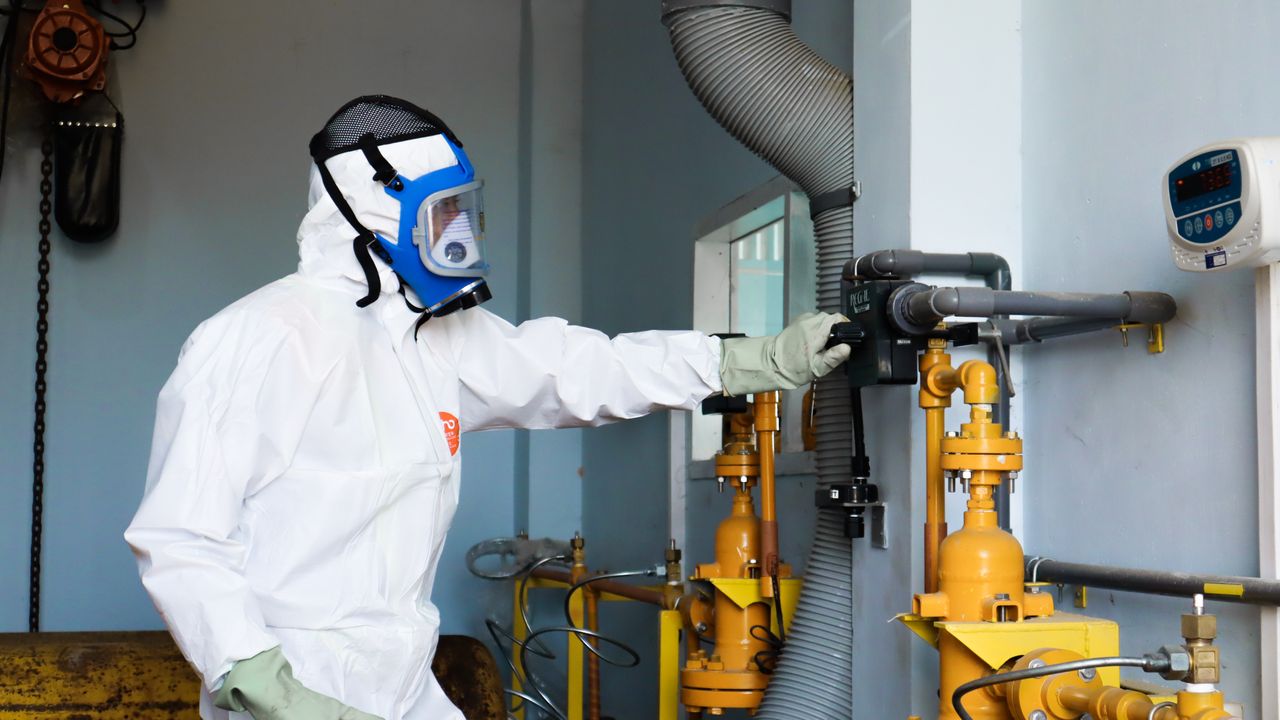
Respirator selection should begin with identifying the workplace hazards rather than choosing equipment based only on comfort, cost, or appearance.
Employers should assess the contaminants, their physical and chemical properties, likely exposure levels, duration of exposure, and conditions under which workers perform their tasks. They must also determine whether the atmosphere contains sufficient oxygen and whether an air-purifying respirator is appropriate.
Important considerations include:
- Contaminant identification: Determine whether the hazard involves particles, gases, vapors, or a combination of contaminants.
- Required protection level: Select equipment that meets the applicable protection requirements for the assessed exposure.
- Atmospheric conditions: Confirm whether an air-purifying respirator can be used safely in the environment.
- Worker needs: Consider medical suitability, fit, mobility, communication, and the physical demands of the job.
- Equipment compatibility: Verify that the facepiece or headgear, blower, filters, and other components are approved for the intended configuration.
- Maintenance and training: Ensure that workers know how to inspect, operate, clean, store, and maintain the equipment.
Employers should consult qualified safety professionals and applicable regulations when making these decisions.
Why Filter and Cartridge Selection Matters
Not all filters or cartridges protect against the same contaminants. A filter intended for particulate hazards may not protect against gases or vapors, while a chemical cartridge may be unsuitable for certain particles unless the configuration includes the required filtration.
The correct selection depends on the contaminant, its concentration, the equipment’s approval, and the manufacturer’s specifications.
Employers should also establish suitable replacement schedules and procedures for checking equipment condition. Workers must not continue using a respirator when its filters, cartridges, battery, or other components have reached their limits or the equipment is not functioning as required.
How Can Workers Maintain Respiratory Protection Equipment?
Regular inspection and maintenance help ensure that respiratory protection equipment remains suitable for use. The specific procedures vary by model, so workers should always follow the manufacturer’s instructions and workplace procedures.
Before using a PAPR, workers should check the condition of the blower, battery, breathing tube, headgear, and filters or cartridges. They should verify that the system operates as intended and that no components are damaged, blocked, or incorrectly installed.
Maintenance practices may include:
- Inspecting equipment before use and after cleaning.
- Charging and storing batteries according to manufacturer guidance.
- Replacing filters and cartridges according to approved schedules.
- Cleaning and disinfecting reusable components using compatible methods.
- Checking airflow and alarms where the equipment provides them.
- Removing damaged or malfunctioning equipment from service.
- Keeping maintenance and inspection records when required.
Workers should receive training on recognizing equipment faults and responding to airflow warnings or other alarms. If a system fails or the worker suspects that protection has been compromised, they should follow workplace emergency procedures and leave the hazardous area when necessary.
Conclusion
PAPRs and other respirators differ in how they deliver clean air, their fit and headgear options, their operational requirements, and the conditions in which they can be used.
A PAPR uses a powered blower to move ambient air through compatible filters or cartridges. Non-powered air-purifying respirators rely on inhalation, while supplied-air respirators and SCBA systems provide breathing air from an independent source.
The most appropriate option depends on the workplace hazards, required protection level, atmospheric conditions, and equipment limitations. Employers should conduct a proper hazard assessment, select approved equipment, and establish effective procedures for training, inspection, maintenance, and use.
Understanding these differences helps workers and employers make more informed decisions about respiratory protection and workplace safety.