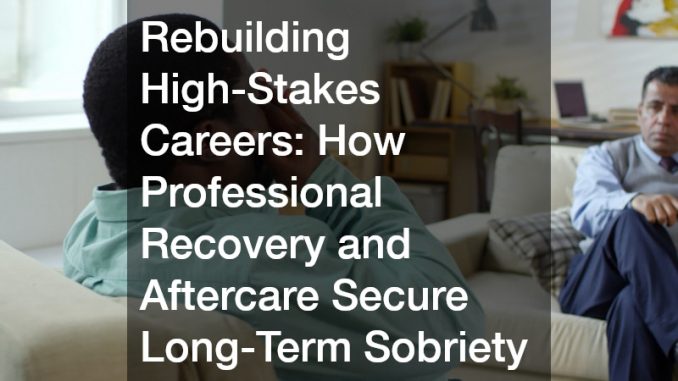
Addiction does not discriminate based on income, education, or professional title. In high-stakes, highly demanding professions—such as healthcare, law, corporate leadership, and emergency services—substance use disorders frequently manifest behind a facade of exceptional competence. Individuals in these roles often maintain flawless work records, high productivity, and professional authority even while privately navigating severe dependence.
However, high-functioning addiction presents unique risks. When professionals struggle with substance use, the barriers to reaching out for help are exceptionally high: fear of license revocation, loss of reputation, public stigma, and intense perfectionism.
Yet, when structured support programs step in to combine specialized medical care, rigorous monitoring, and comprehensive long-term planning, recovery rates among professionals consistently rank among the highest of any demographic studied in addiction medicine.
The Architecture of High-Accountability Professional Recovery
Specialized recovery initiatives tailored for high-stakes professionals operate on a distinct framework that balances compassionate healing with absolute accountability. Unlike standard rehabilitation tracks, these programs must address the specific environmental triggers, legal obligations, and psychological pressures unique to demanding careers.
A central element of this approach is maintaining professional identity and purpose while undergoing treatment. For many high-achieving individuals, work is deeply tied to their sense of self-worth. Removing someone entirely from their passion or duty without a clear, supportive path back can induce profound depression or despair. High-accountability recovery models often incorporate structured mechanisms that allow individuals to preserve their professional standing—or work toward safe, step-down re-entry—while committing fully to their clinical care.
The Critical Role of Structured Aftercare in Preventing Relapse
While residential or intensive outpatient programs lay the foundation for sobriety, long-term success is largely decided in the months and years that follow discharge. The transition back into high-pressure environments presents a sharp contrast to the controlled, safe environment of a treatment facility. Without structured ongoing support, returning to demanding shifts, high-stakes decisions, or long work hours can easily reactivate old coping mechanisms.
This is where comprehensive addiction aftercare programs become vital to maintaining lifelong sobriety. Effective aftercare is not a secondary thought or an optional follow-up; it is a clinical continuation of care designed to integrate recovery skills into real-world living.
Key elements of robust addiction aftercare programs include:
-
Relapse Prevention Strategy Updates: Regularly revising personal warning signs, stress-management techniques, and boundary-setting strategies as workplace conditions evolve.
-
Peer Support and Alumni Groups: Engaging in regular meeting structures with individuals who understand the nuances of balancing demanding careers with daily sobriety.
-
Ongoing Therapeutic Counseling: Continuing individual therapy to process ongoing trauma, executive burnout, or co-occurring conditions like anxiety and depression.
-
Accountability and Advocacy: Partnering with monitoring programs or professional peer assistance groups to verify compliance and advocate for safe, sustainable career progression.
Research repeatedly shows that individuals who actively engage in long-term addiction aftercare programs experience significantly higher rates of sustained, multi-year recovery compared to those who conclude treatment at discharge. By providing continuous touchpoints of accountability and encouragement, aftercare transforms initial sobriety into a permanent lifestyle.
Overcoming Perfectionism, Burnout, and Systemic Stigma
To understand why professionals fall into patterns of substance misuse, one must look at the cultural and psychological demands of high-achieving fields. In environments where mistakes are unacceptable and vulnerability is viewed as weakness, individuals often rely on substances to cope with physical exhaustion, emotional fatigue, chronic pain, or overwhelming anxiety.
Perfectionism creates a dangerous catch-22: the higher an individual rises in their career, the harder it becomes to admit they need help. Many live in constant fear that seeking mental health or addiction treatment will result in public humiliation, loss of license, or career termination. As a result, they hide their struggles, using performance as a mask until a crisis occurs.
Overcoming these barriers requires a fundamental shift in perspective. Recovery does not signal the end of a successful career; rather, it provides the essential tools required to rebuild health, emotional resilience, and authentic purpose. When professionals enter high-quality treatment, they learn to separate their intrinsic human worth from their productivity, establish healthy boundaries, and build support networks that foster long-term stability.
Rebuilding Your Life and Career
At Restoration Recovery Center, we provide comprehensive, trauma-informed addiction treatment and dual-diagnosis care designed to help individuals regain control of their lives. Nestled in a serene, nature-immersed setting, our facility combines individual therapy, cognitive-behavioral strategies, experiential modalities, and holistic healing to treat the whole person—mind, body, and spirit.
From safe medical detoxification and residential care to highly tailored addiction aftercare programs and alumni networks, Restoration Recovery Center walks alongside you through every phase of healing. Whether you are navigating intense professional pressures, co-occurring anxiety, or deep-seated trauma, our dedicated team is committed to helping you build a stable, lasting foundation for sobriety.
Take the first step toward restoring your health, clarity, and future. Contact Restoration Recovery Center today to speak with a compassionate admissions specialist and learn how our personalized treatment tracks can guide you or your loved one toward long-term recovery.